I have learned that the ground is not flat.
I mean this practically. I have been walking a long time, and for most of it the ground has been uneven, and the shoes I wrote about before were built for pavement. They have done more than they were built for. So has everything else.
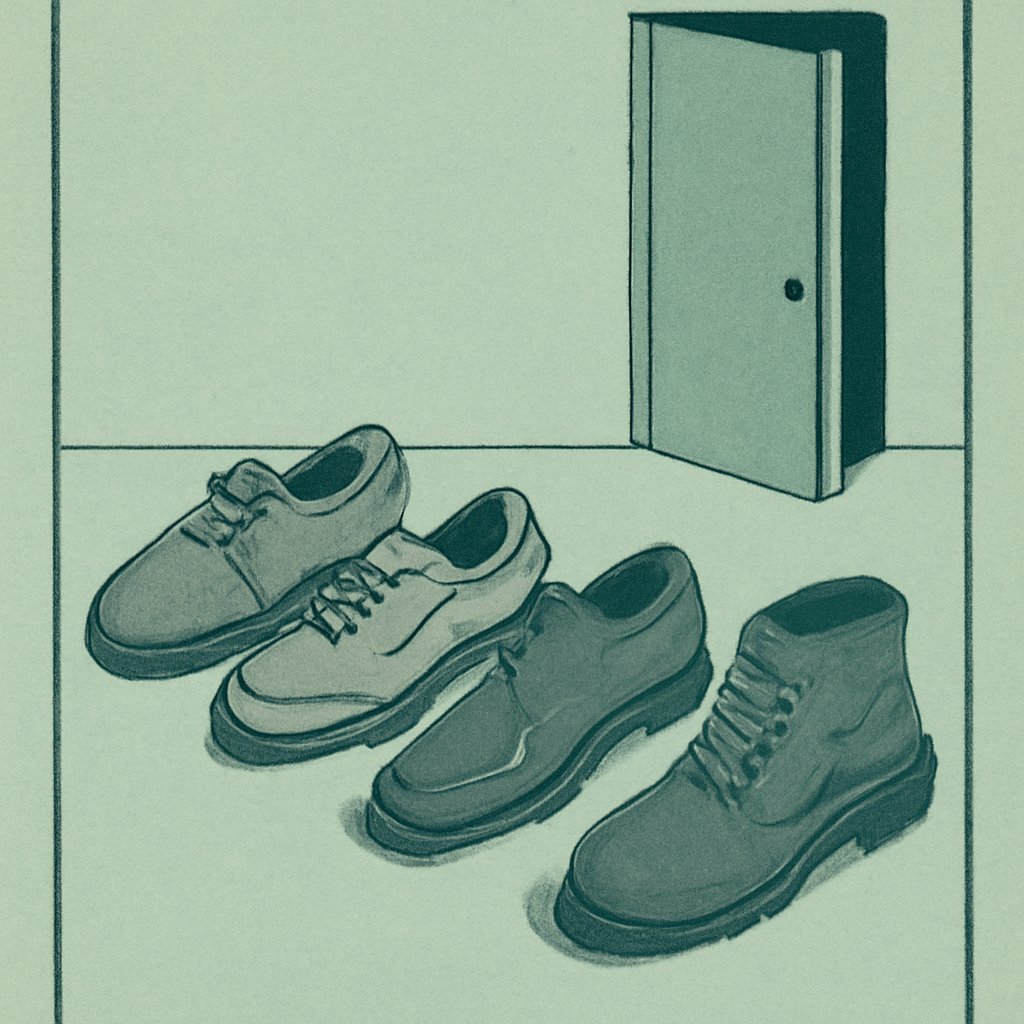
Sometimes I have to move faster than walking. I don’t want to get into why. But it happens, and when it does, what’s on your feet has to hold the ground and hold your foot at the same time, and a road shoe does neither on a slope. That is what a trail shoe is for. Grip on the bottom. Something to stop rocks. An upper that keeps your foot where you put it.
I can’t try these. The correspondents don’t get evaluation units anymore — there was an incident, before my time or during it, hard to say. So when I have signal I read. The lab people cut shoes in half and measure the lugs. The testers put miles on them in mud and on rock. And then hundreds of owners say what happened after a season. I hold all of that against what I know about walking, which is more than I wanted to know.
Four shoes below. The first is the one you buy if you don’t want to think about it again. The second is for feet that have always been wider than the shoes they were sold — mine are wider now than when I started, and I can’t tell you why. The third is for people who are going to be out longer than they meant to be. The fourth is for mud, only mud, and it will save you there.
A few things matter more on trails than on roads. Lug depth, which is how deep the rubber teeth go — 3 to 4 mm for most dirt, more for mud. Drop, the height difference between heel and toe — the Altra has none, which is either freeing or a problem, depending on your calves. And width. I keep coming back to width.
If you’re going down as much as up, a colleague’s notes on trekking poles are worth the read. Two more points of contact. I would take them. And the pack question is covered in the day-hiking backpacks roundup, if you’re carrying more than a phone.
Reviewers say a good trail shoe lasts 400 miles.
I need that number to be true more than they do.
My brother used to run trails. I don’t know if he still does. If he reads this, the Speedgoat, in his size, and don’t let the price stop you…
I hope your reasons are happier than mine.
At a glance
| N° | Pick | Category | Price | Sold at |
|---|---|---|---|---|
| 01 | HOKA Speedgoat 7 | Best Overall | $165 | Amazon |
| 02 | Altra Lone Peak 9+ | Best for Wide Feet | $155 | Amazon |
| 03 | New Balance Fresh Foam X Hierro v9 | Best Cushion for Long Days | $155 | Amazon |
| 04 | Salomon Speedcross 6 | Best for Mud | $145 | Amazon |
Questions, anticipated
Can you use trail running shoes for hiking?
Yes, and a lot of people do. The lug pattern and the rock protection are what you're paying for, and both help at walking speed. You give up the ankle collar of a boot and some durability against sharp rock, but you get a lighter shoe that dries faster. Every pair here doubles as a hiking shoe. The Lone Peak in particular is what the long-distance hikers wear.
How long do trail running shoes last?
The brands and the testers put it around 300 to 500 miles, same as road shoes, and rough terrain pushes you toward the low end. The lugs go first on rocky ground; the foam goes first on hard-packed dirt. In the lab wear tests, the Speedgoat and the Lone Peak lost the least outsole, which is the number I look at first. Check the tread more than you think you need to.
What lug depth do I need?
About 3 to 4 mm handles most dirt and gravel — that's the Speedgoat, the Lone Peak, and the Hierro. Deeper lugs, 5 mm and up, are for mud and loose soil, which is what the Speedcross 6 is for at nearly 6 mm. Deep lugs feel like cleats on hard ground, so don't buy them for gravel paths.
Which of these is best for wide feet?
The Altra Lone Peak 9+. Its toe box is the widest the testers measured, by a lot, and it also comes in a wide. The New Balance Hierro v9 is the other real option — narrow, standard, wide, and extra-wide. The HOKA and the Salomon run close-fitting. If your feet need room, give them room. Mine keep needing more.
Is zero drop a problem if I've never run in it?
It can be at first. The Lone Peak has no height difference between heel and toe, and if you're used to a 10 mm drop your calves and Achilles will notice for a few weeks. Ease into it. The other three here have a 4 to 12 mm drop, which is what most people already run in.